









What is Low Volume Manufacturing?
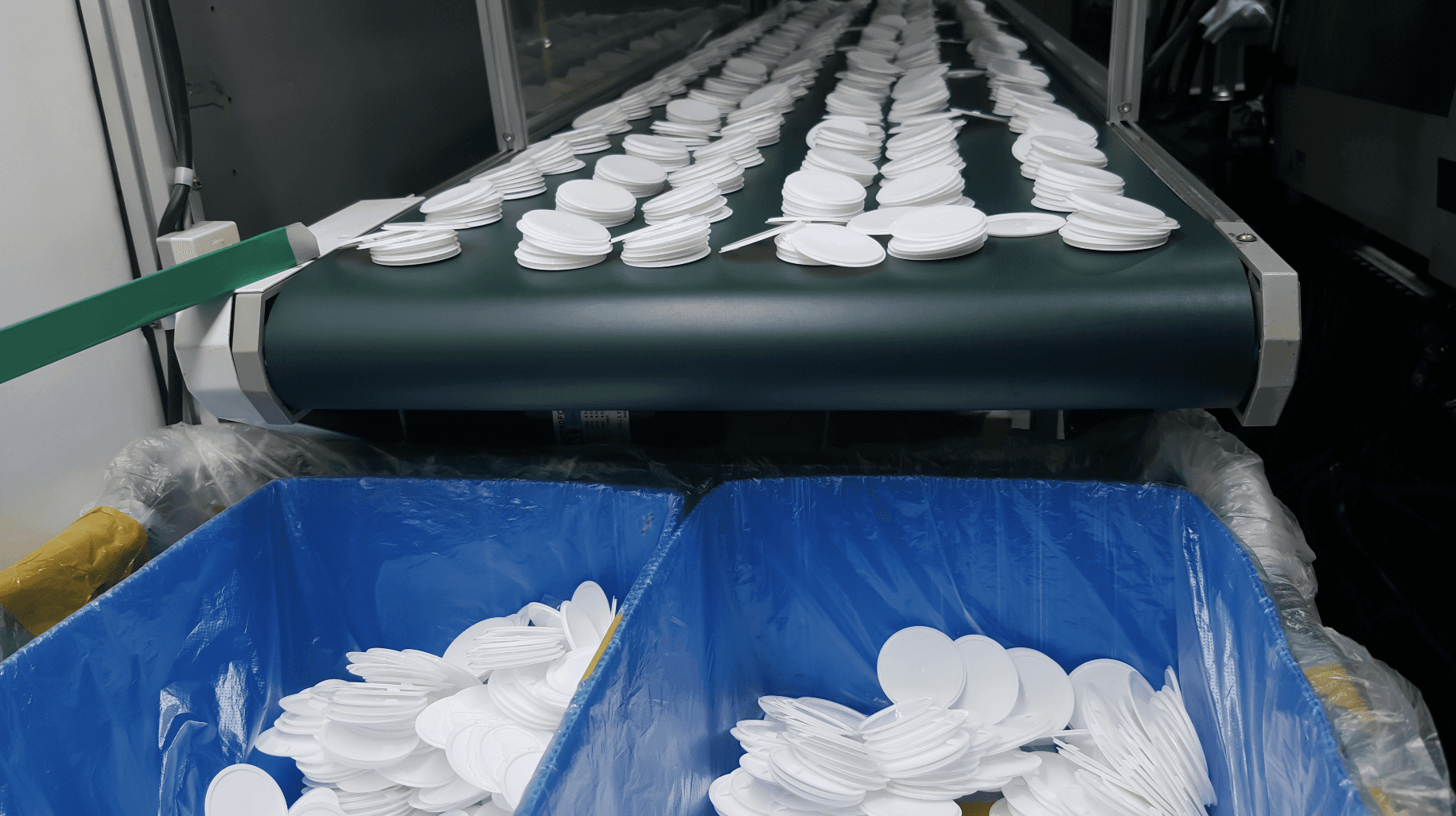
Low volume manufacturing is a specialized production strategy that bridges the gap between rapid prototyping and full-scale mass production, typically involving quantities ranging from 10 to 1,000 units. Traditional manufacturing—like injection molding—often requires months of lead time and thousands in upfront tooling costs and with Low Volume Manufacturing, you can skip all tool costs and simplify the design costs.
At Wellstronics3D, our low-volume production process focuses on plastic parts and eliminates the need for mold tooling. It also simplifies the design process, allowing your designs to move directly from CAD to production at our Twin Cities location. This "bridge" approach not only delivers parts to your customers faster and for less capital but also offers unmatched adjustability. If customer feedback requires a design change, we can implement updates instantly without the devastating cost of re-tooling. Contact us today to see how our low-volume services can streamline your product launch.

High-quality production runs of 100 to 1,000+ parts without the wait
Scalable 3D printing solutions to bridge the gap to mass production
Consistent quality across low-volume manufacturing batches
Rapidly test market demand before investing in expensive tooling
Flexible order quantities to match your actual sales
Seamless transition from final prototype to first-run production

Eliminate expensive mold costs and start production immediately
No upfront tooling investment required for complex plastic parts
Drastically reduced startup costs for new product launches
On-demand manufacturing to reduce inventory overhead and storage
Update and iterate designs between batches without "bricking" a mold
Budget-friendly manufacturing for startups and entrepreneurs

Get products into your customers' hands in days, not months.
Short lead-time manufacturing to beat your competitors to market.
Fast turnaround on marketing samples and sales demos
Rapid replenishment of out-of-stock inventory items
Streamlined production workflows for emergency part replacement.
Local Minneapolis & St. Paul pickup and shipping for local speed.

High-fidelity parts for trade shows, investor pitches, and early adopters.
High-quality surface finishes suitable for retail photography
Functional units for beta testing and customer feedback loops
Creating investor-ready samples to secure project funding
Small-batch runs for Kickstarter and Indiegogo reward fulfillment
Professional aesthetic models that look and feel like a final product

Manufacturing hard-to-find components that are no longer in production
Cost-effective reproduction of discontinued legacy components
Supporting older machinery with custom 3D printed replacements
Digital archiving to ensure future part availability on demand
Small batch runs to satisfy warranty and repair obligations
Eliminating the need for high-minimum order quantities (MOQs) from OEMs

Minimize financial exposure while maintaining total design control
Lower financial risk compared to traditional injection molding
Freedom to create complex geometries that are "un-moldable"
Easy design tweaks between production batches at no extra cost
Material versatility to match specific functional requirements
Expert DFM (Design for Manufacturing) feedback included in every run
Is 3D printing cost-effective for production runs of 100 to 1,000 parts?
Yes. For small to mid-sized batches, the "cost-per-part" in Industrial Additive Manufacturing is often lower than traditional injection molding because there are zero upfront tooling costs. We specialize in identifying the "break-even point" where low volume production provides the highest ROI, allowing you to scale your inventory without the heavy capital expenditure of traditional manufacturing.
How does low volume production reduce the risk of manufacturing failures?
High-volume production is permanent; if there is a design flaw in a $50,000 mold, the cost to fix it is devastating. Low volume production acts as a final validation phase. It allows you to test the "Form, Fit, and Function" of a large batch of parts in the actual market. If minor design refinements are needed, they can be made digitally in the CAD file before the final production tooling is cut, saving you thousands in potential rework.
Are low volume production parts durable enough for end-use applications?
Absolutely. We use engineering-grade materials such as Carbon Fiber Nylon, Tough Resins, and Ultem that offer mechanical properties comparable to injection-molded plastics. These parts are not just for show; they are dimensionally accurate, chemically resistant, and structurally sound, making them ideal for end-use components in medical, automotive, and consumer goods industries.
Can I use low volume production parts to test a product before full-scale launch?
Yes and in fact, this is a critical step in professional product development. By producing a "Pilot Run" of 100 units, you can place your product in the hands of real users to gather data on durability, ergonomics, and functionality. Any feedback received can be integrated into the final design before you commit to the significant capital expenditure of high-volume injection mold tooling.