









What is 3D scanning?
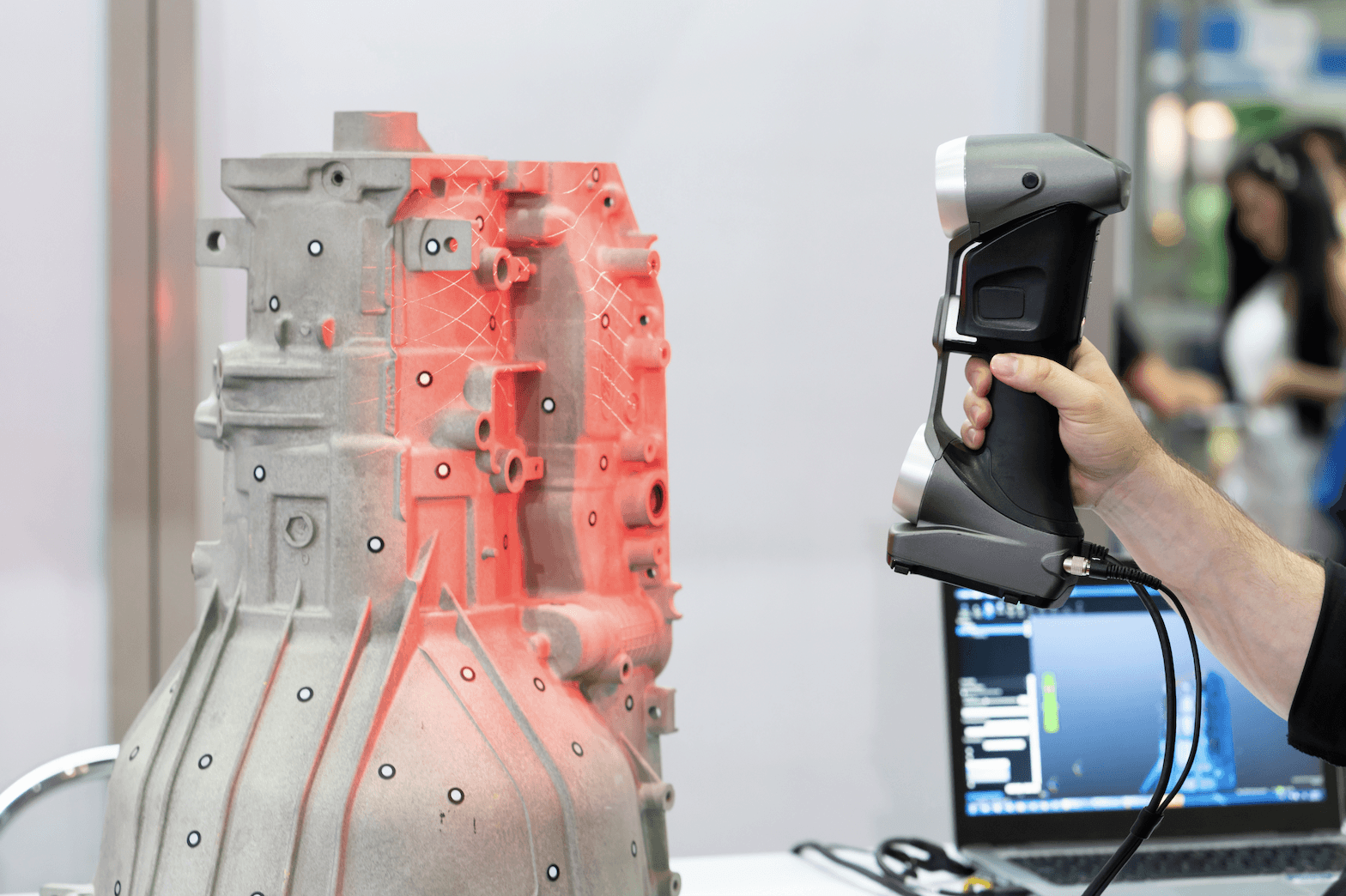
3D scanning is a non-contact measurement process that Wellstronics3D uses to digitize physical objects by copying the visible surfaces from the object into a computer program. This data can then be measured and reviewed inside of computer programs for further processing, measurement or evaluation.
If you have complex parts or organic shapes that are difficult to measure with traditional tools, you have come to the right place. Our metrology-grade 3D scanning services in Minneapolis and St. Paul ensures your most intricate physical assets are transformed into high-fidelity digital data. This precision data is ready for immediate use in CAD design, reverse engineering, and detailed inspection reports, providing you with the clarity needed for your most demanding projects.

Professional 3D scanning for engineering, manufacturing, and quality control in Minneapolis & St. Paul
Verified Accuracy (VDI/VDE 2634 & ISO 10360)
Industrial Laser Light and Infrared Light Scanning
Scan Accuracies of 0.02mm
Metrology-grade 3D scanning for large and small components
Volumetric Accuracies of 0.02 + 0.033 mm/m

Ensure accuracy with detailed metrology analysis
Detailed inspection reports for First Article Inspection (FAI)
Heat Map Comparison of physical parts vs. CAD data
Deviation analysis to identify manufacturing defects fast
Accurate volumetric and surface area data
Non-contact inspection

Ultra high resolution for small, intricate components
5-micron accuracy for medical and electronic parts
2-micron repeatability for consistent results.
Capturing fine textures for jewelry and dental applications
Accuracy - ISO Certified 12836
For objects up to 200 × 200 × 150 mm

Verify and digitize manufacturing aids for peak production in the Minneapolis, St. Paul and Twin Cities areas.
Digital verification of custom jigs and assembly fixtures
Scan-to-CAD for end-of-arm tooling (EOAT) and robotics
Wear analysis and maintenance tracking for stamping dies and molds
Rapid replacement of broken shop-floor tools via 3D scanning
Digitize custom shop-floor aids to enable rapid replacement of broken tools

Mobile scanning solutions brought directly to your location
On-site 3D scanning for large machinery, vehicles and castings
Portable professional 3D scanners for hard-to-ship objects.
Nationwide availability for field-based engineering projects
Scan-to-CAD conversion for large industrial assemblies
Additional processes available (manufacturing, design and more)

Preserve and digitize valuable artifacts with amazing detail
Non-contact 3D scanning for delicate cultural artifacts
High-fidelity color and texture capture for digital archiving
Creating digital copies for historical restoration and research
Digitizing clay models and hand-carved artwork for scaling
Digital scaling for bronze casting and large-scale sculptures
What is the difference between consumer 3D scanning and metrology-grade scanning?
Consumer scanners often produce "mesh" data that is visually representative but dimensionally unreliable. Our metrology-grade 3D scanning utilizes industrial blue-light or laser sensors to capture data with accuracies up to .001 inches (.025mm). This precision is required for mission-critical applications like aerospace components, automotive parts, and high-tolerance mechanical assemblies. In addition to higher accuracies, the scanners capture data much quicker and with much more detail.
How is 3D scanning used for Quality Control and Inspection?
We use Scan-to-CAD inspection to compare a physical manufactured part against its original 3D design file. This process generates a "Heat Map" or deviation report that visually identifies exactly where a part is out of tolerance. This is a vital tool for validating first-article inspections and ensuring manufacturing consistency across production runs or the inspection of production geometry from part to part.
Can 3D scanning capture dark, shiny, or highly reflective surfaces?
Yes. While standard scanners struggle with reflections, our industrial metrology equipment is designed to handle complex surfaces, including polished metals and dark plastics. For extremely challenging finishes, we use specialized non-destructive vanishing sprays to ensure we capture a complete, high-resolution digital twin without damaging the original part.
What size objects can your metrology-grade 3D scanners capture?
We utilize a range of specialized industrial scanners to ensure the highest resolution for any part size. Our High-Resolution scanners capture microscopic detail on extremely small parts (like dental or electronic components), while our Small-to-Medium scanners handle everything from handheld tools to engine blocks. For large-scale projects, our Long-Range systems can accurately digitize objects as large as full-sized vehicles or industrial machinery, maintaining metrology-grade precision across the entire surface.