








What is Reverse Engineering?
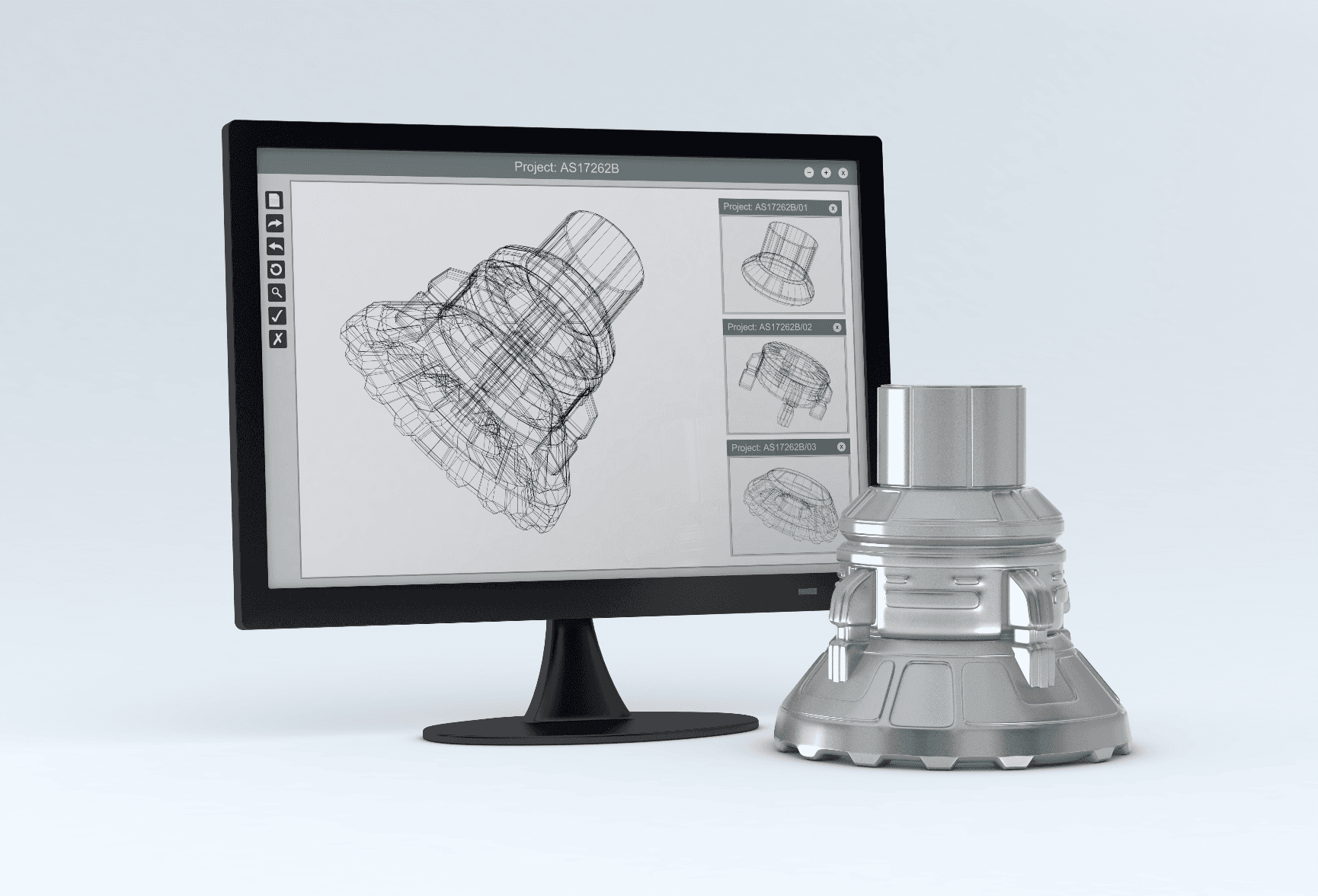
Reverse engineering is the process of capturing the physical geometry of an object using 3D scanning and then recreating the scanned geometry in a CAD software like SolidWorks. The final result of a Reverse Engineered Part is a fully editable parametric solid 3D model that can be used for manufacturing, manufacturing quotes, additional design modification, or DFM optimization. It can also be used to create 2D PDF documentation with dimensions, tolerances, surface finish and material callouts.
Wellstronics3D excels in providing top-notch Reverse Engineering Services in Minneapolis, St. Paul and the surrounding Metro. These services are tailored for manufacturing companies, R&D teams, engineering, and maintenance and quality departments facing challenges with obsolete parts, products and undocumented tooling. Our dedicated team specializes using 3D scan data to recreate precise and fully parametric solid CAD models with comprehensive feature trees. In addition to CAD models, we also offer detailed 2D drawings and deviation analysis from Scan to CAD. Our comprehensive solutions also include fabrication instructions, Bills of Materials, and Assembly Instructions, ensuring a seamless manufacturing process. Whether you require the recreation of discontinued products, the cataloging of undocumented tools, or the design of new products around existing models, Wellstronics3D is able to help.

Transforming raw scan data into fully editable Solidworks files (.SLDPRT)
Creation of fully parametric 3D models with complete feature trees.
Native Solidworks (.SLDPRT / .SLDASM) and universal .STP / .IGS files
Accurate capture of complex organic and mechanical geometries
Designing for design intent to correct worn or damaged physical parts.
Streamlined workflows to reduce engineering lead times by up to 75%

Rebuilding the "impossible to find" parts that keep your business running.
Reverse engineering legacy components with no existing drawings
Precise recreation of discontinued industrial machinery parts
Modernizing older designs for current CNC manufacturing processes
Physical-to-Digital conversion to prevent future supply chain gaps
Cost-effective alternatives to expensive OEM replacement parts

High-accuracy digital assets optimized for CNC machining and production
Metrology-grade 3D scanning to ensure precise dimensional accuracy
Models optimized for 4-axis and 5-axis CNC programming
Extraction of critical mating surfaces and hole patterns
Providing clean, water-tight geometry for CAM software integration
Minimizing manufacturing errors and scrap rates via digital validation

Digitizing full assemblies to understand fit, form, and mechanical function
Recreating multi-part assemblies in Solidworks (.SLDASM)
Interference and clearance checks within the digital environment
Generating accurate Bill of Materials (BOM) from physical scans
Identifying mechanical improvements during the digitization process
Significant development time savings for complex machinery upgrades

Your local Minneapolis & St. Paul partner for high-tech digital recreation
In-person consultations at our Inver Grove Heights facility
On-site scanning for large, sensitive, or non-shippable parts
Direct communication with the engineers building your CAD files
Supporting local Minnesota manufacturers, molders and machine shops
Reliable rapid turnaround of simple and complicated parts

Restoring worn, broken, or warped parts to their original "as-designed" specifications
Correcting mechanical wear and physical damage in the digital CAD model
Restoring perfect symmetry and concentricity to deformed components
Optimizing geometry for improved performance and durability over the original
Extracting nominal dimensions from high-resolution scan data
Ensuring exact bolt-pattern alignment and interface tolerances
What is the difference between 3D scanning and reverse engineering?
3D scanning is the process of capturing a physical object’s geometry as a "cloud" of data points. Reverse engineering is the professional service of taking that raw data and meticulously recreating the part in CAD. While a scan is just a digital picture, a reverse-engineered model is a functional engineering file that can be modified, simulated, and used for manufacturing.
Can you provide native SolidWorks files with full feature trees?
Yes. Unlike many services that only provide "dumb" solids, we can recreate physical parts in SolidWorks with full feature trees (.SLDPRT & .SLDASM). This allows you to edit the design history and dimensions directly. We also provide industry-standard formats including .STP, .IGS, .X_T, and more, ensuring compatibility with any CAD platform.
How do you verify the accuracy of a reverse-engineered CAD model?
We use a multi-stage verification process to ensure metrology-grade precision. We utilize calipers, micrometers, and pin gauges to manually verify critical features, but we also perform a digital Body Comparison. By overlaying the new CAD file directly onto the 3D scan data, we can visually and mathematically determine exactly how accurate the CAD model is in reference to the original physical part.
Do you provide 2D engineering drawings for reverse-engineered parts?
Absolutely. Once the 3D model is finalized, we generate comprehensive 2D engineering drawings with full dimensional tolerances. Delivered in .PDF and .DXF formats, these drawings provide your team with the technical data required for CNC machining, laser cutting, and final quality control inspections.