







What is 3D Modeling & CAD?
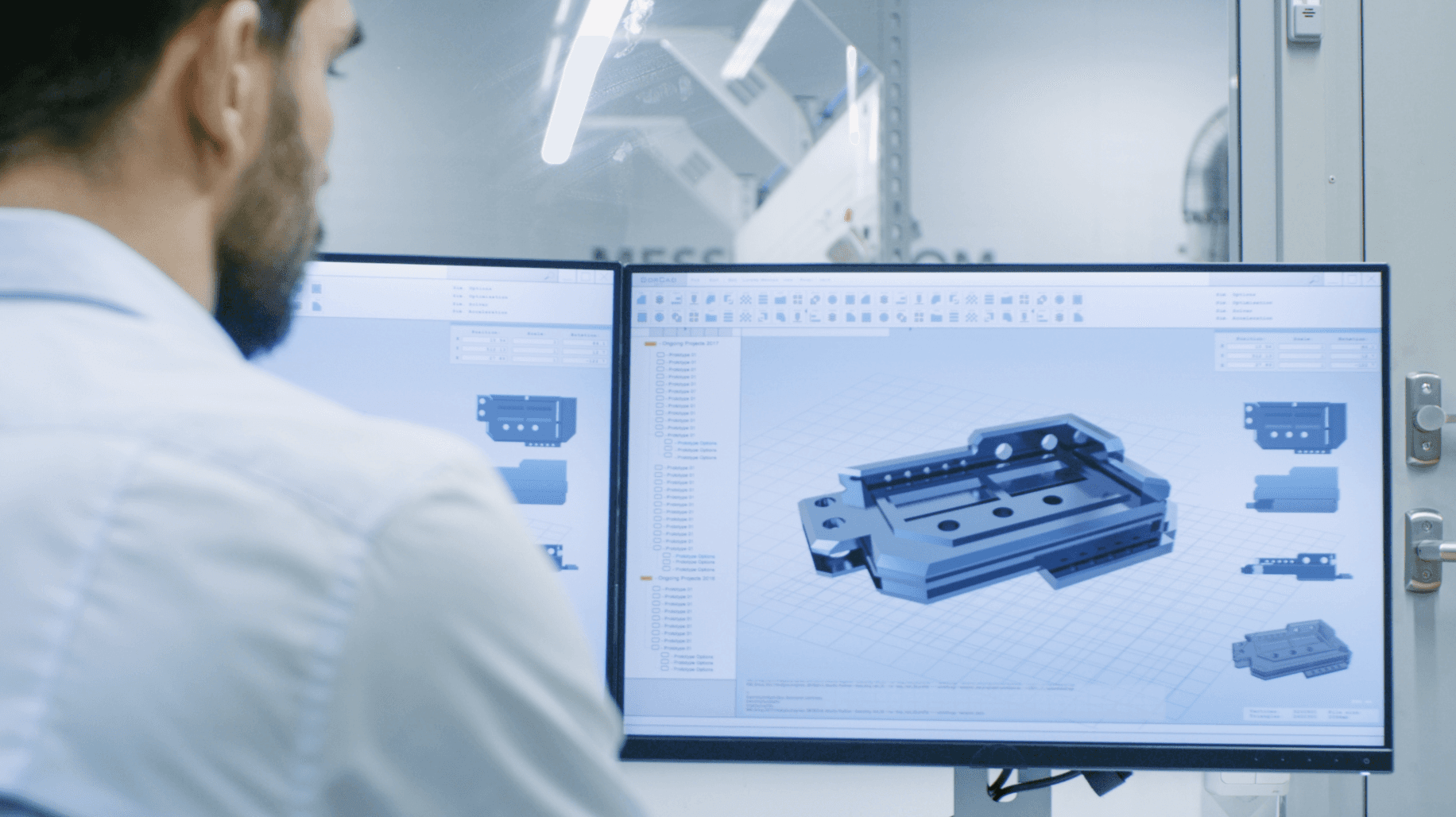
3D Modeling and Computer-Aided Design (CAD) is the technical process of creating precise, geometry specific three-dimensional objects (part files, assembly files) using a software like SolidWorks. These files contain all of the measurements, geometries, materials, tolerances and more that help engineers manufacture parts, products and assemblies. In addition to the 3D models, 2D Drawings and Bills of Materials can be created that help develop a more clear picture of how much a product, part or assembly would cost to produce? It can also help with 3D renderings, assembly instructions, and much more.
Every great product begins as a concept, but moving from an idea to a 3D model or physical prototype is a challenging task. We specialize in transforming your early-stage ideas into fully-realized 3D models optimized for form, fit, and function. Whether you are refining a mechanism or visualizing a new invention, our Twin Cities-based 3D modeling & CAD services provide the foundational CAD data needed for rapid prototyping and design validation. We bridge the gap between idea and concept, giving you the details you need to move your idea forward.

Fast, visual 3D models to help you visualize your ideas before investing in engineering
Rapid 3D modeling from napkin sketches or verbal descriptions
Visual concept validation to explore multiple design directions
High-fidelity digital "mockups" for early-stage brainstorming
Basic organic and geometric modeling for shape exploration
Fast iteration cycles to find the right aesthetic direction quickly

Affordable physical models for "look and feel" testing without high engineering fees
Economical Prototyping PLA/PETG for basic fit checks
Scale models of large ideas to test proportions and size
Fast, functional-looking prototypes for internal team reviews
Quick-turnaround prints to test ergonomics and hand-feel
Affordable material options to keep your R&D budget under control

Simple, clear technical illustrations for internal use and patent documentation.
Converting napkin sketches into 3D concepts and then into 2D Drawings
Part dimensioning to define the overall size of your design
Creation of laser & water jet cutting profiles (.DXF)
Export of graphic representations of models (.AI, .PDF)
Bills of Materials, Section Views, Cut-Away Views, Material Callouts, Surface Finish

High-quality digital images to help you pitch your idea to investors
Photorealistic 3D renders of your product concept
Digital color and material studies to see how your product should look
High-resolution images for Kickstarter or Pitch Decks
360-degree views and exploded animations for social media
Visual assets that make your concept look market-ready and professional

Fixing broken 3D files or converting different formats for 3D printing
STL to STEP conversion for basic geometry modification
Mesh repair for files that won't print correctly (manifold errors).
Digital file optimization to reduce file size and complexity
Creating part and assembly files
Converting Old Parametric Solid Models to Native Solidworks Files with Feature Tree

Professional guidance to help you navigate the early stages of product design
Strategic feedback on how to take your idea from sketch to model
Identifying key challenges before you spend money on engineering
Advice on the most cost-effective path for your specific invention
Personalized 1-on-1 reviews (Local Minneapolis or Virtual)
Deciding when your design is ready for formal manufacturing prep
What do I need to provide to start the 3D modeling process?
We can begin with as little as a hand-drawn sketch, a crude physical mockup, or a detailed verbal description. Our Rapid Concept Design service is specifically built to handle early-stage ambiguity. We translate your initial "napkin sketches" into professional SolidWorks CAD data, defining the core measurements and geometries needed to move your idea forward.
Can 3D modeling help determine if my invention is affordable to build?
Absolutely. A primary benefit of early-stage CAD is the ability to generate a preliminary Bill of Materials (BOM) and part volume data. By defining the geometry early, we can provide you with a clearer picture of potential material costs and manufacturing complexity, helping you vet the financial viability of your invention before moving into full-scale development.
How do I show my idea to investors or partners if I don't have a prototype yet?
Beyond technical files, we use your 3D models to create high-fidelity 3D renderings and assembly instructions. These visual tools are essential for presentations, allowing you to show exactly how your invention functions and looks in a real-world environment. This "digital prototype" is often the most effective way to communicate your vision to stakeholders without the lead time of physical manufacturing.
What is the benefit of starting with professional CAD instead of a basic 3D sketch?
Professional SolidWorks CAD is more than just a visual; it is a precise mathematical definition of your product. Unlike basic artistic models, our CAD data includes accurate wall thicknesses, draft angles, and mechanical clearances. Starting with professional-grade models ensures that your concept is actually buildable, preventing costly "re-dos" when you eventually move into manufacturing.